Radon testing Brownsburg IN homeowners should prioritize starts with understanding a silent, invisible threat. Radon is a naturally occurring radioactive gas that forms when uranium breaks down in soil and rock. It seeps into homes through foundation cracks, gaps around pipes, and crawl spaces, accumulating to dangerous levels before homeowners even realize it is there. radon testing Brownsburg IN is not just a precaution it is an urgent necessity. Hendricks County sits squarely within EPA Radon Zone 1, the highest-risk classification in the country, meaning elevated radon levels are common across the area, including in newer homes built with passive mitigation systems.
Why radon testing Brownsburg IN Matters More Than You Think
Understanding Indiana’s Radon Risk
Indiana ranks among the highest-risk states in the nation for radon exposure. The geological composition of the soil throughout Hendricks County, combined with the style of home construction common in Brownsburg with finished basements and tight building envelopes creates the perfect conditions for radon to accumulate indoors. The EPA recommends action when radon levels reach 4.0 picocuries per liter (pCi/L) or higher, and Indiana homes regularly exceed that threshold. What makes the risk harder to detect is that radon is invisible, odorless, and tasteless. You cannot see it, you cannot smell it, and you cannot feel it. The only way to know whether your home has a radon problem is to test.
How Radon Enters Your Home
Radon moves through soil and enters homes through the path of least resistance. Foundation cracks, gaps around service pipes, construction joints, and even the porous surface of concrete blocks can all serve as entry points. Once inside, radon becomes trapped, especially in lower levels of the home that lack adequate ventilation. Basements and crawl spaces in Brownsburg homes are particularly vulnerable because they sit at ground level and are often sealed tightly for energy efficiency, limiting the air exchange that would otherwise dilute the gas. Even homes with passive radon mitigation systems installed during construction should be tested, since these systems do not guarantee safe levels without confirmation.
What the Radon Testing Process Looks Like
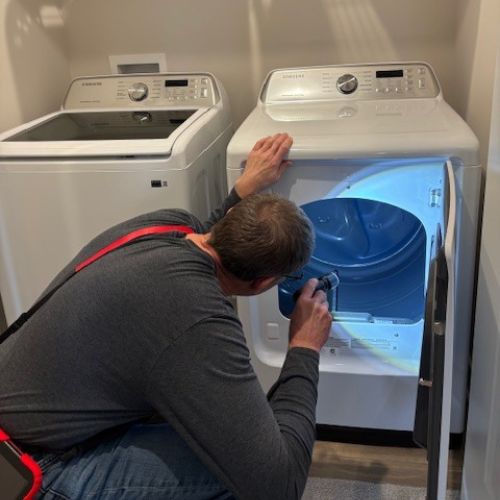
Professional radon testing through Right-Way Home Inspection uses continuous electronic monitors placed in the lowest livable level of the home. The device runs for a minimum of 48 hours, collecting readings throughout the testing period. This method captures a reliable average and accounts for fluctuations that short-term readings alone might miss. After testing, a detailed report documents the results and clearly explains whether the levels require action. If mitigation is needed, Right-Way Home Inspection helps interpret the findings so homeowners understand exactly what the next steps should be.
A Brownsburg Landmark Worth Knowing
Brownsburg is home to more than just great neighborhoods and top-ranked schools. O’Brien Park sits near the heart of town and serves as a gathering point for the community throughout the year. The park features athletic fields, a splash pad, shelters, and walking paths that wind through mature trees. For families exploring life in Brownsburg, a visit to O’Brien Park offers a good sense of the town’s character and the pride residents take in their outdoor spaces. More information about Brownsburg’s parks and recreation amenities is available through the Brownsburg Parks and Recreation Department.
Frequently Asked Questions About radon testing Brownsburg IN
How often should a home be tested for radon?
The EPA recommends testing every two years, and any time a home undergoes significant renovation that could affect air flow or foundation integrity. New home purchases should always include radon testing, regardless of whether the home has a passive mitigation system.
Can radon levels change over time?
Yes. Seasonal changes, weather patterns, and home renovation activity can all affect radon levels. A home that tested safely five years ago may not maintain those levels today, which is why periodic retesting is important for every Brownsburg homeowner.
Is radon mitigation expensive?
Most radon mitigation systems cost between $800 and $2,500, depending on the home’s size and configuration. The process typically involves sub-slab depressurization, where a pipe and fan system vents radon from beneath the foundation to the outside. This is a proven, durable solution that brings most homes well below the EPA action threshold.
Does radon only affect older homes?
No. Brand-new construction in Brownsburg is not automatically safe from radon. While newer homes may have passive mitigation systems, these systems require confirmation through testing to verify they are functioning adequately.
Right-Way Home Inspection provides professional radon testing Brownsburg IN and throughout the surrounding communities, including Avon, Plainfield, Zionsville, Danville, and the West Side of Indianapolis. Protecting your family from a risk that cannot be seen or smelled starts with a reliable test from a certified inspector. Contact Right-Way Home Inspection today and Schedule Now to book your radon test with confidence.