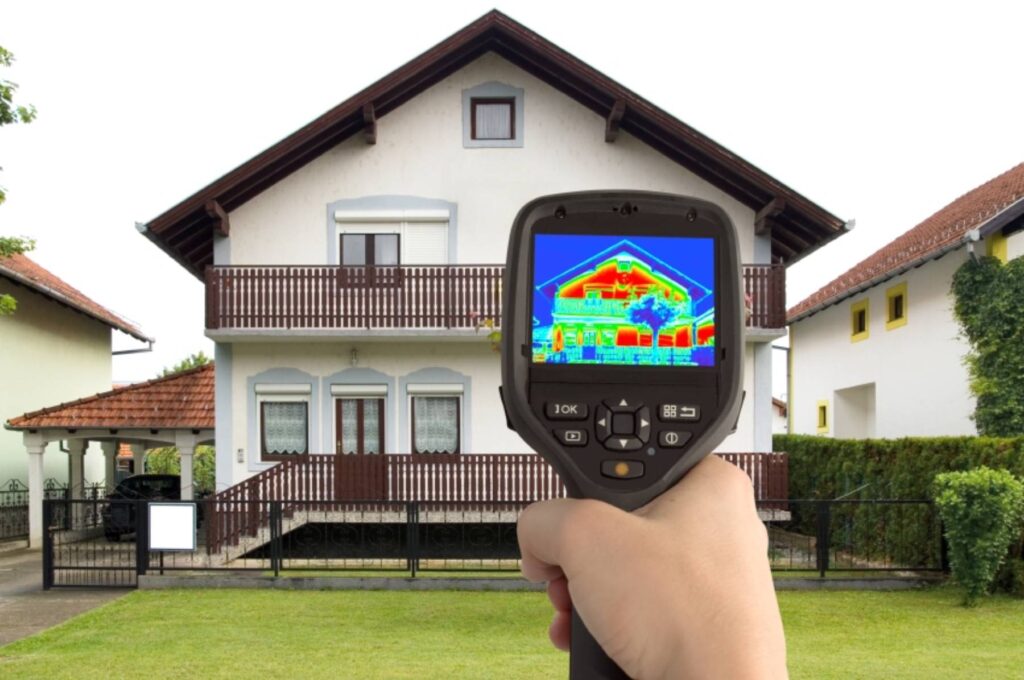
A thermal imaging inspection uses an infrared camera to reveal temperature differences across walls, ceilings, and floors that are completely invisible to the naked eye. Those temperature differences often point to real problems, including missing insulation, hidden moisture, and air leaks that drive up utility bills throughout an Indiana winter. At Right-Way Home Inspection, LLC, adding a thermal imaging inspection to a standard home evaluation gives buyers and homeowners a clearer picture of what is actually happening inside the walls, not just what is visible on the surface.
How a Thermal Imaging Inspection Actually Works
During a thermal imaging inspection, an infrared camera captures surface temperature variations and displays them as a color coded image. Warmer and cooler areas show up distinctly, which allows me to spot patterns that indicate a problem rather than simply guessing based on a visual walkthrough. A cold streak running along a wall stud pattern often signals thermal bridging or a gap in insulation, while an unexpected cool spot near a ceiling can point to an active roof leak or condensation building up behind drywall. None of these conditions would necessarily show up during a standard visual inspection, which is exactly why a thermal imaging inspection adds real value.
Why Indiana Homes Benefit From This Extra Layer
Brownsburg and the surrounding Circle City communities see a real swing in temperatures across the year, from humid summers to cold winters with significant heating demand. That seasonal swing is actually what makes a thermal imaging inspection most effective, since infrared results are strongest when there is a meaningful temperature difference between the inside and outside of a home. Homes throughout Avon, Plainfield, and Zionsville built at different points over the past several decades often show inconsistent insulation coverage from renovations, additions, or attic work that was never brought fully up to standard. A thermal imaging inspection during the right season can expose those gaps clearly.
What a Thermal Imaging Inspection Can Reveal
Beyond insulation gaps, a thermal imaging inspection is particularly good at identifying moisture intrusion before it becomes visible mold or staining. Water changes the thermal signature of the materials it touches, so a slow leak behind a shower wall or around a window flashing detail often shows up as a distinct cool patch well before any staining appears on the surface. The same technology can flag electrical hot spots at outlets or panel connections, which sometimes indicate a loose connection or an overloaded circuit that deserves further evaluation by a licensed electrician.
Getting the Most Value From a Thermal Imaging Inspection
A thermal imaging inspection works best as a complement to a full home inspection rather than a replacement for one. The infrared camera identifies temperature anomalies, but interpreting what those anomalies mean requires understanding how a home’s structure, insulation, and mechanical systems typically behave. That is where combining a thorough visual inspection with thermal imaging gives you the most complete and reliable results, since each method catches things the other might miss.
The U.S. Department of Energy provides useful background on how professional home energy assessments work, including how infrared cameras are used alongside other diagnostic tools to identify where a home is losing energy.
Frequently Asked Questions
Is a thermal imaging inspection included with a standard home inspection? A thermal imaging inspection is typically offered as an add on service, since it requires specialized equipment and additional time to properly interpret the results.
Does a thermal imaging inspection require a big temperature difference outside? Results are strongest when there is a meaningful gap between indoor and outdoor temperatures, which is why fall, winter, and early spring tend to produce the clearest readings in Indiana.
Can a thermal imaging inspection detect active roof leaks? Yes. Moisture behind ceiling or wall surfaces often shows up as a distinct cool spot on infrared images well before a visible stain appears, making it a useful early warning tool.
Will a thermal imaging inspection find every problem in my home? No single tool catches everything. A thermal imaging inspection is most valuable when paired with a full visual home inspection, since each approach reveals different types of issues.
If you want a clearer picture of what your walls and ceilings are hiding, ask about adding a thermal imaging inspection to your next visit. Schedule Now with Right-Way Home Inspection, LLC.
Proudly serving Avon, Brownsburg, Clermont, Danville, Indianapolis, Lebanon, Lizton, Pittsboro, Plainfield, Royalton, Speedway, Whitestown, and Zionsville.